Humanoid robots are increasingly appearing in the media and in promotional materials from technology companies. They move like humans, perform simple tasks, and make a strong visual impression. But the key question is:
do humanoid robots have real business applications today, or are they still more of a vision than a practical solution?
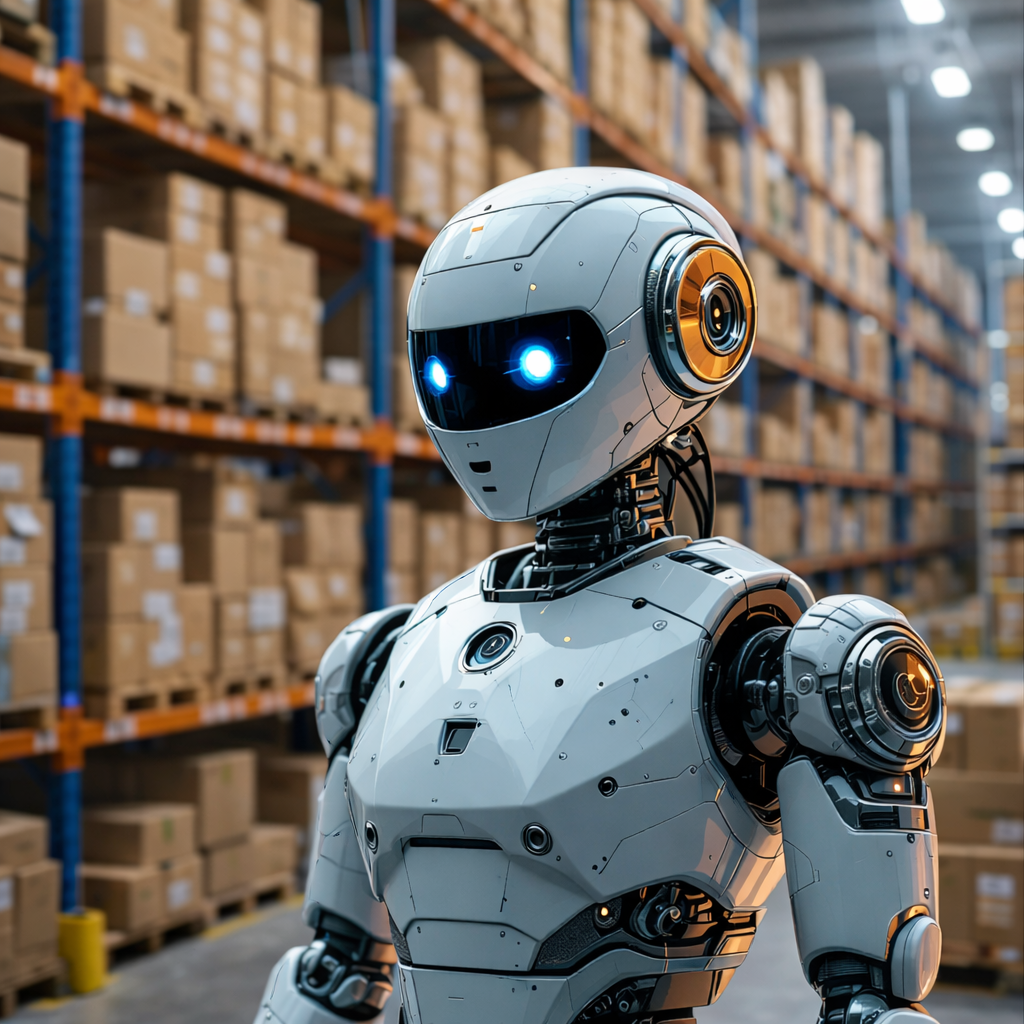
What are humanoid robots?
Humanoid robots are machines designed to resemble humans — both in appearance and movement.
Their goal is to operate in environments built for people, without requiring major infrastructure changes.
In theory, they can:
- walk
- pick up objects
- use tools
- collaborate with humans
What do manufacturers promise?
The vision is highly ambitious.
Humanoid robots are expected to:
- replace humans in physical work
- be universal (one robot for multiple tasks)
- operate in warehouses, factories, and even offices
It sounds like a revolution — but reality is more complex.
What does it look like in practice?
As of today, humanoid robots:
- are very expensive
- operate slower than humans
- require supervision
- are still in testing and pilot phases
There are very few real business deployments. Compared to warehouse robots (AGV/AMR), humanoids are still at a much earlier stage of development.
Where can humanoids make sense?
Despite their limitations, there are areas where humanoids may have potential:
- simple, repetitive tasks
- testing and pilot environments
- marketing and PR (e.g. technology demonstrations)
- experimental industries
For now, these are niche use cases rather than large-scale deployments.
In many real-world applications, traditional warehouse robots still perform much better in terms of efficiency and cost
Are Warehouse Robots Worth It in Europe? Costs, Use Cases and Real Insights
Where humanoids do NOT make sense today
In most companies, humanoid robots:
- are not cost-effective
- do not offer advantages over simpler solutions
- generate more cost than value
This is especially true in areas such as logistics, manufacturing, and warehousing, where processes are repetitive and optimized for specific tasks.
In these environments, specialized robots perform much better — they are designed for a single function, faster, cheaper, and more efficient than humanoids.
Conclusions: future or just marketing?
Humanoid robots are undoubtedly impressive from a technological perspective.
Today, their use in business is limited, and in many cases they lose to simpler, specialized solutions. However, this does not mean it will always be the case.
Humanoids are largely a technology of the future — their capabilities will continue to grow, and current limitations will gradually disappear. With the development of artificial intelligence and decreasing costs, the advantage of traditional robots may diminish over time.
Today, specialized robots dominate in terms of efficiency, while humanoids are still in development. However, in the long term, humanoids may become the most universal tool for work.
The real question is not “if”, but “when” humanoids will have a meaningful impact on business applications.
If you want to explore the real costs and limitations of automation, check out this article
How Much Does Warehouse Automation Cost in 2026? Real Costs, Examples, and ROI