Automation Does Not Always Guarantee Success
Many companies assume that implementing robots will automatically improve efficiency and profits. However, reality is often more complex.
Poorly planned automation projects can generate high costs and disappointing results.
1.Lack of Process Analysis
One of the biggest mistakes is implementing automation without understanding warehouse workflows first.
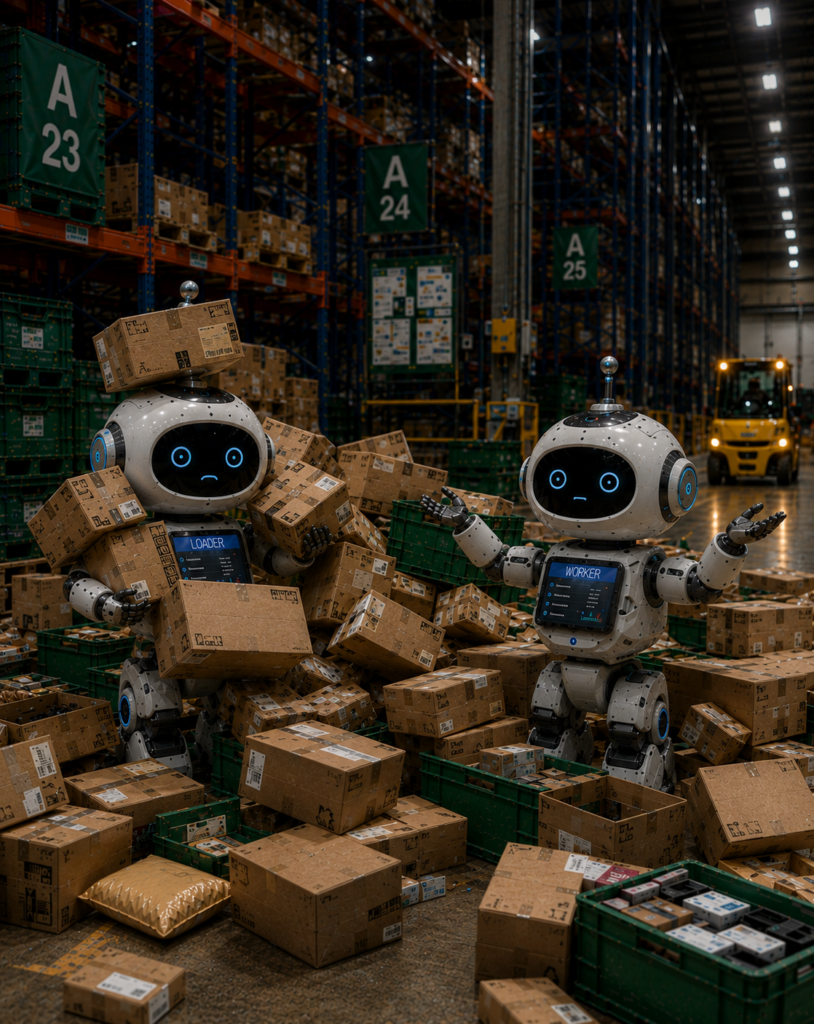
In practice, this means automating chaos instead of eliminating it.
2. Small Operational Scale
Not every warehouse needs robots. Therefore, in smaller operations, the investment may never pay off.
3. Choosing the Wrong Robot Type
Selecting the wrong technology is a common issue.
for example:
- AGVs work best in stable environments
- AMRs perform better in dynamic warehouses
4. Lack of Employee Preparation
Automation changes the way people work. Moreover, insufficient training may lead to operational issues and employee resistance.
5. Underestimating Costs
Companies often focus only on the purchase price of robots. However, they should also consider:
- maintenance
- software
- integration
- system support
6. No Long-Term Strategy
Automation is a long-term investment. Therefore, systems should support future business growth.
7. Unrealistic Expectations
Robots can significantly improve efficiency, but they do not solve every problem instantly.
As a result, unrealistic expectations often lead to disappointment.
You can also check: How Much Does Warehouse Automation Cost in 2026?
Conclusion
Warehouse automation can deliver major benefits, however, only when properly planned and implemented.
In practice, success depends on process analysis, selecting the right technology, and maintaining realistic expectations. Moreover, companies that implement automation gradually often achieve better long-term results.
See also: 5 Biggest Mistakes When Implementing Warehouse Robots