What Determines the Number of Robots?
One of the most common questions in warehouse automation is:
how many robots do you actually need?
The answer depends on several key factors. Therefore, it is essential to analyze your operations before making a decision.
Order Volume
The number of daily orders is a fundamental parameter.
the more orders:
- the more workload for robots
- the greater the need for automation
Processing Time
Another important factor is how quickly orders need to be completed. In practice, shorter lead times require higher efficiency.
robots can speed up operations, but they must be properly sized.
Type of Processes
Different processes require different levels of automation.
key areas include:
- picking
- transport
- packing
Moreover, some processes are easier to automate than others.
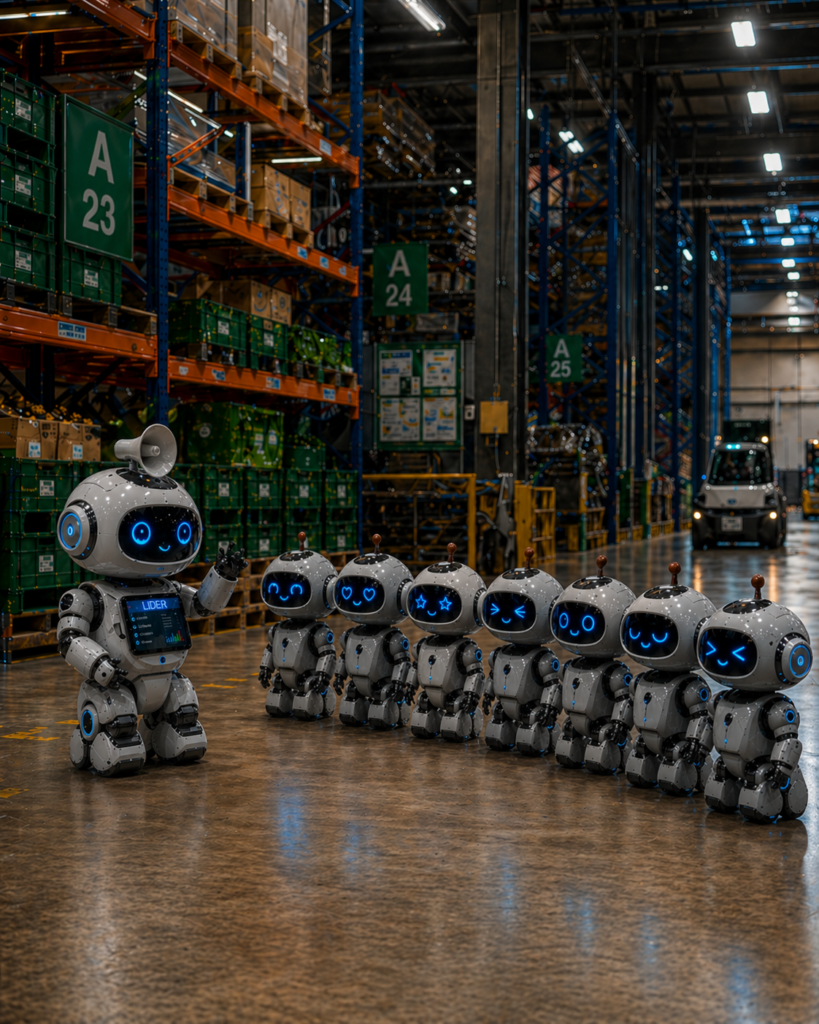
Scalability
Companies often plan for growth. At the same time, too few robots can limit expansion.
it is important to think long-term.
How to Calculate It?
In simple terms:
1 robot = a certain number of operations per hour
This allows you to estimate total demand. However, precise calculations require real operational data.
To understand the costs, see also: how much warehouse automation costs in 2026
Common Mistakes
Companies often:
- underestimate demand
- overestimate robot capabilities
- ignore future growth
learn more here:
the most common mistakes when implementing warehouse robots
Conclusion
The number of robots in a warehouse should never be random. Therefore, decisions should be based on real data, such as order volume, processing time, and the type of operations.
In practice, most companies start with a smaller number of robots and gradually scale as their operations grow. Moreover, this step-by-step approach allows better cost control and reduces implementation risk.
On the other hand, trying to calculate the “perfect number” from the very beginning often leads to mistakes. Therefore, flexibility and scalability are far more important than the exact number of robots at the start.