Choosing the right type of warehouse robot can directly impact efficiency, costs, and scalability. See how AGV, AMR, and humanoid robots compare in real-world applications.
Why the Choice of Robot Matters
Warehouse automation is not just about deciding whether to automate, but how. Therefore, selecting the right type of robot is critical for overall system performance.
Each solution offers different capabilities, costs, and levels of flexibility. As a result, choosing the wrong
AGV – Best for Structured Environments
Automated Guided Vehicles (AGV) operate along predefined paths, such as lines or tracks.
advantages:
- high predictability
- operational stability
- lower implementation cost
limitations:
- limited flexibility
- requires infrastructure (e.g., markers or rails)
In practice, AGVs work best in environments with stable, repeatable workflows.
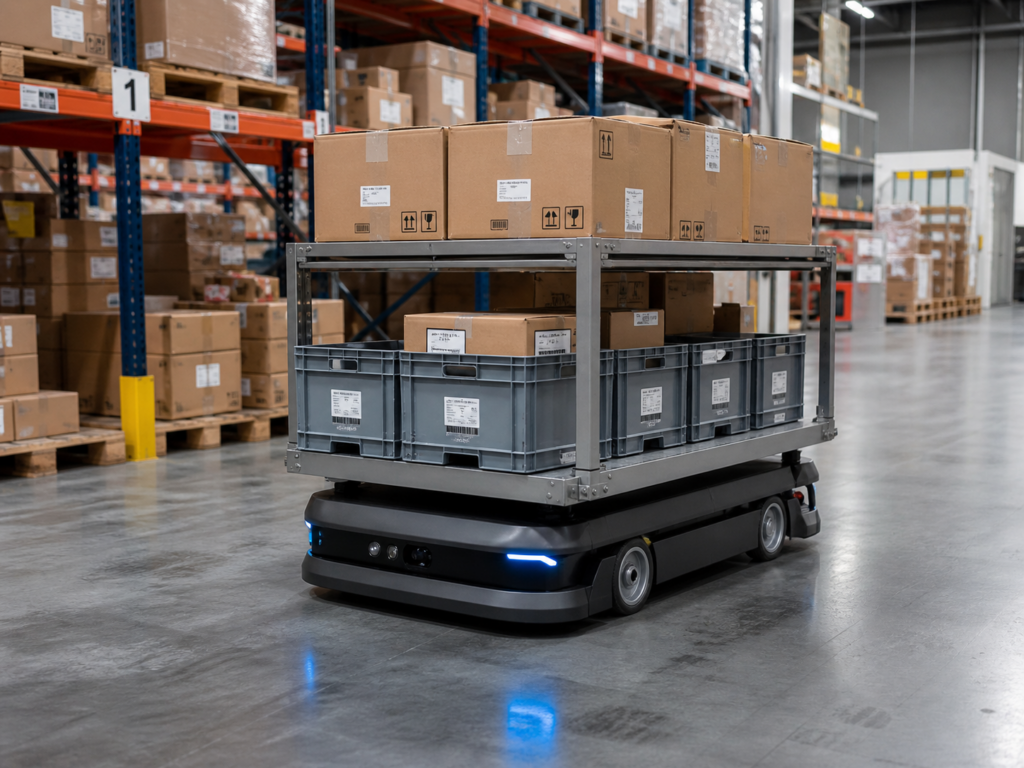
AMR – Flexibility and Scalability
Autonomous Mobile Robots (AMR) use sensors and AI to navigate dynamically without fixed routes.
advantages:
- high flexibility
- quick deployment
- easy scalability
limitations:
- higher cost
- greater system complexity
Therefore, AMRs are ideal for dynamic warehouses where processes frequently change.
Humanoid Robots – Future or Hype?
Humanoid robots are still in an early stage of development. However, their long-term potential is significant.
advantages:
- high versatility
- ability to operate in human environments
limitations:
- very high cost
- lack of scalable real-world deployments
At this stage, humanoid robots are mainly used in testing and experimental scenarios.
Which Solution Should You Choose?
in short:
- small, stable warehouse → AGV
- dynamic environment → AMR
- R&D / innovation projects → humanoid robots
if you want to understand costs, see also:
how much warehouse automation costs in 2026
and for ROI insights:
is warehouse automation worth it
Conclusion
There is no one-size-fits-all solution. Therefore, choosing the right robot should always depend on your specific operations.
In practice, this means analyzing your processes, scale, and available budget. Moreover, many companies combine different technologies to achieve the best results.
On the other hand, making a decision without proper analysis can lead to inefficient implementation and unnecessary costs.